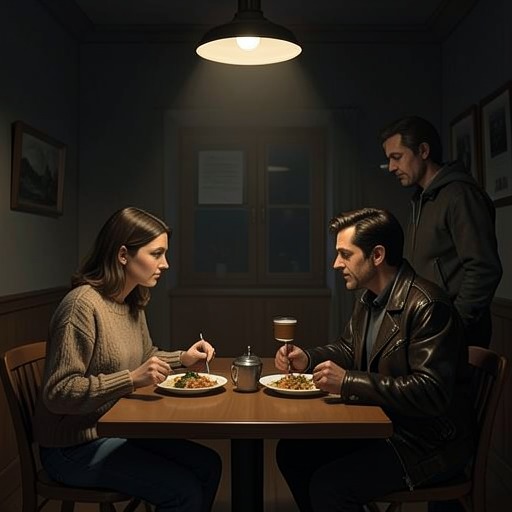
This is a family
MARRIED TO MY MASTER: A Bad Boy Hitman Romance“This is a family” is an expression of belonging that gathers meaning from acts of care rather than from a formal declaration. Scarlet thinks it when Moira and Cormac MacKay bring coffee and bacon to her bedside, but the thought immediately meets her doubt: she wants to say she belongs, yet recognizes that she does not feel able to claim that place outright. Elsewhere, Grizzly’s account of the Butchers shows the phrase’s broader resonance: family is something the club tries to build through protection, responsibility, and the discipline of keeping one another safe.
A bedside scene of care
Scarlet wakes with the smell of coffee and bacon. Moira places the coffee beside the bed, while Cormac MacKay arrives with two bacon rolls and sets them on the other bedside table. Their simple attention makes the room feel, for an instant, like a place where she could fit. The expression arises from this concrete arrangement: food within reach, familiar company on both sides of the bed, and care offered without requiring Scarlet to explain herself first.
That comfort is not uncomplicated. Scarlet remembers telling Moira about Tess and remembers kicking and flailing at Cormac; much else from the preceding night is blurred. She feels like a patient, with a pounding head, rather than someone settled securely into a family. Her inward answer, “Like I belong,” is checked at once by the admission that she does not. The scene therefore gives the phrase both its warmth and its limit: she recognizes what family might look like before she can trust that she has a place in it.
Belonging as something built
The Butchers’ family language is connected to Grizzly’s account of responsibility toward younger members. He describes Kid as good-hearted but sometimes foolish, and says that he tries to keep him in line. Kid’s older brother had been a Prospect before “everything,” and Kid looks up to what the club has built. Grizzly’s concern is consequently more than friendly indulgence: he wants to guide Kid so the earlier harm is not repeated. In this context, belonging includes protection and correction, not simply affection.
Grizzly’s conduct toward the women around the club makes that protective claim concrete as well. When others assume the woman in the room beside his is a club girl and joke about his having a girlfriend, he draws a clear boundary: she is not a club girl, and they are to leave her alone. The warning presents care as an obligation backed by authority. The group’s joking response does not erase the rule; it shows that the boundary is being enforced in a social world where others may otherwise treat a woman’s presence as permission.
Protection and the limits of the ideal
Candy’s account explains why Grizzly’s conduct carries particular weight within the club. She had come from another motorcycle club, where club girls were not treated well. Grizzly witnessed men beating women and behaving abusively toward them in public, intervened, and offered the women a chance to leave with him if they wanted a better place while remaining in the life. Some left and some stayed; Candy chose to go with him and says she has not regretted it. The Butchers’ family ideal is thus set against a specific history of mistreatment, and its meaning lies partly in the possibility of choosing a safer group.
The expression is not a claim that every uncertainty has disappeared. Candy’s experience supports the reality of the protection Grizzly offers, while the club’s rules and his effort to keep Kid in line show that this community also has authority and expectations. Scarlet’s bedside thought makes the same tension intimate: she can see the shape of a family in care given to her, yet does not immediately feel entitled to call herself part of it. Across these moments, family is both a promise of shelter and a belonging that has to be made credible through action.